
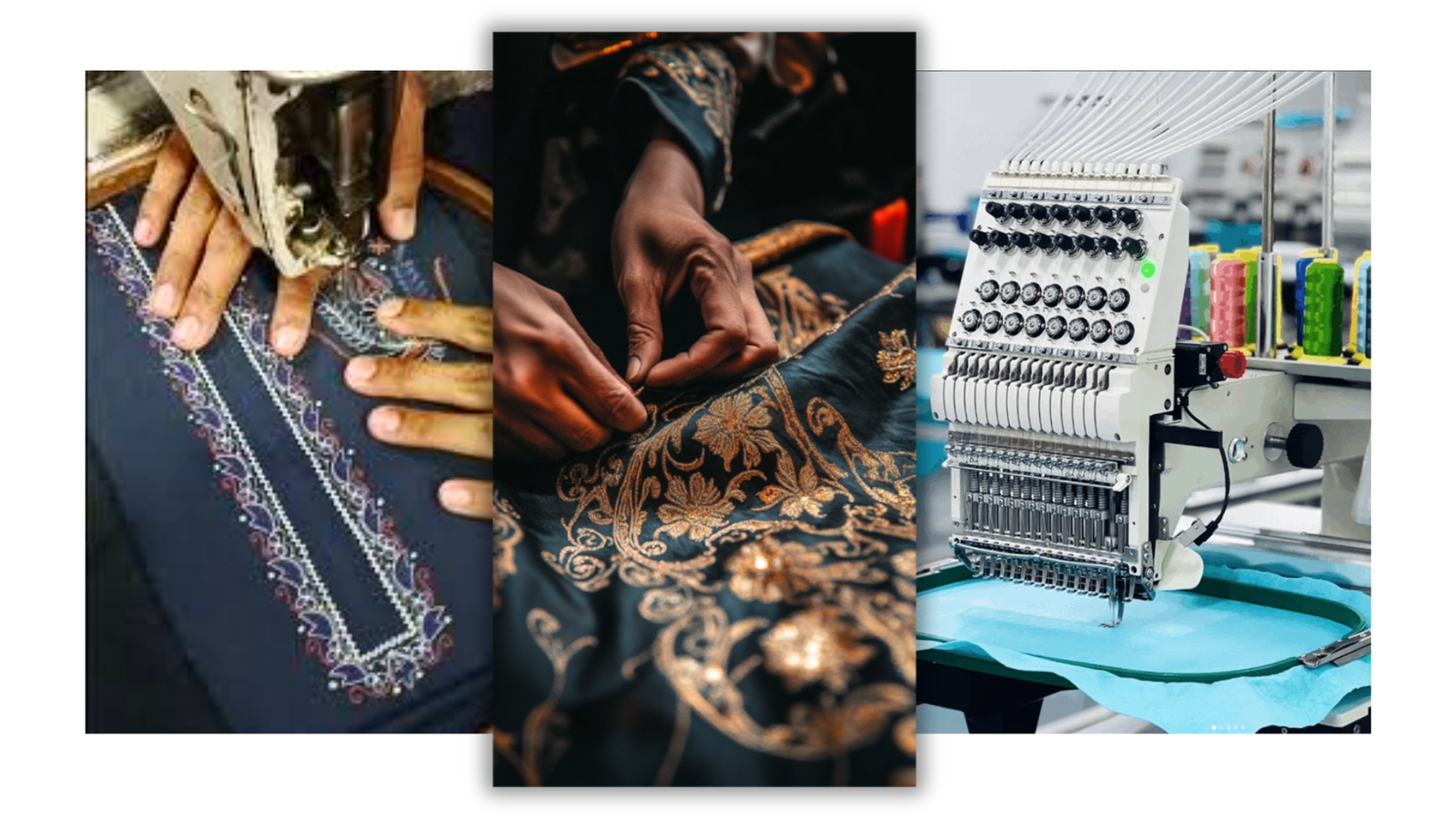
Understanding the Three Types of Embroidery Hand Embroidery Digital Embroidery and Machine Embroidery
Embroidery is an ancient art form that has evolved with time while maintaining its cultural and artistic value. Today embroidery exists in three main forms hand embroidery, digital embroidery, and machine embroidery. Each type has its own technique, purpose, and level of craftsmanship. Understanding these differences helps in appreciating the skill behind embroidered textiles.
Hand embroidery is the oldest and most traditional form of embroidery. It is done entirely by hand using needle and thread. This type of embroidery requires patience, precision, and deep skill. Every stitch is placed manually which makes each piece unique. Hand embroidery is often used in heritage garments, luxury couture, and traditional cultural clothing. The beauty of hand embroidery lies in its imperfections which add character and authenticity to the design.
Digital embroidery is a modern technique where designs are created using software. The embroidery pattern is digitized and then transferred to an embroidery machine. This method allows highly detailed and complex designs to be reproduced consistently. Digital embroidery is widely used for branding, logos, and contemporary fashion where precision and uniformity are required. It bridges the gap between traditional art and modern technology.
Machine embroidery uses automated embroidery machines that follow programmed designs. It is efficient for large scale production and ensures speed and consistency. While machine embroidery lacks the individuality of hand embroidery, it is ideal for commercial use where volume and cost efficiency are important. Advances in technology have significantly improved the quality of machine embroidery over time.
Each embroidery type serves a different purpose. Hand embroidery is valued for artistry and cultural heritage. Digital embroidery is preferred for accuracy and design flexibility. Machine embroidery is chosen for mass production and affordability. Designers often combine these techniques to achieve both aesthetic appeal and practicality.
In textile traditions where craftsmanship holds deep meaning, embroidery is more than decoration. It tells stories, represents identity, and preserves cultural legacy. Brands that respect embroidery as an art form focus on thoughtful execution rather than trends. Aagaz subtly embraces this philosophy by appreciating embroidery techniques that honor skill, heritage, and modern relevance.